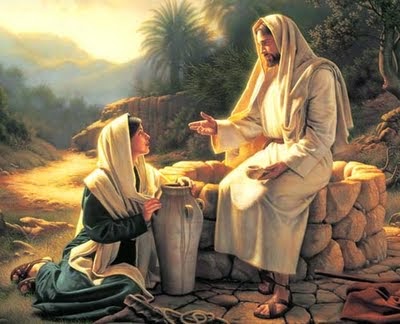
John 4:19-26
“Our Fathers worshiped on this mountain, and you Jews say that in Jerusalem is the place where one ought to worship” (John 4:20). In our last post, I pointed out that this was a point of contention with the Jews and the Samarians. What constitutes true worship?
To read the previous posts regarding “The Woman at the Well” Click the links below. Jesus Goes Where Nobody Goes, A Woman, the Disciples, and Living Water, What does Living Water Look Like?
When Israel as a nation split into the Northern and Southern Kingdoms, the kings of the Northern Kingdom were concerned that traveling to Jerusalem for religious festivals would put his people in danger, so a new place to worship and offer sacrifices to God was built on Mount Gerizim. After hearing Jesus speak, the woman perceives that this is a prophet sent by God. She has tactfully diverted the conversation, hoping to avoid confrontation. After all, this is a point of contention between the Jews and the Samaritans.
Why is it a point of contention? When Judah returned from 70 years of exile in Babylon, a second temple was built to replace the temple destroyed by Nebuchadnezzar. The Samarians had wanted to help build the temple but were denied. In response, the Samarians built their temple to God on Mount Gerizim. This is the same mountain as in Deuteronomy 11:29. The temple on Mount Gerizim was destroyed in 112-111 BCE by the Jews and was not rebuilt. Now, you can see even more hostility between these two groups. However, even though the temple was destroyed, sacrifices continued to be offered at the site of the temple upon Mount Gerizim.
Jesus understands this shift in her thinking and responds in a way to disarm any possible conflict. Jesus says, “Woman, believe Me, the hour is coming when you will neither on this mountain nor in Jerusalem worship the Father” (John 4:21). Jesus continues by saying something that looks to be confusing but isn’t. Verse 22: “You worship what you do not know; we know what we worship, for salvation is of the Jews.
“Let’s hit the pause button and take a moment to explain the above statement. “You worship what you do not know.” Jesus is saying there is nothing wrong with worshipping as you do, but you do not understand the reason behind the way you worship. To understand the reason for your worship and especially your sacrifices, you must look toward the Jews. This is why Jesus continued by saying, “We know what we worship for salvation is of the Jews.” What nationality was Jesus? Of course, He was Jewish of the tribe of Judah from the lineage of King David. Jesus is saying that the Jews should know the reasons why they sacrifice and worship the way they do. For salvation comes from the Jews through the birth, life, and sacrifice of the Messiah. But that gift of the Messiah, which comes from the Jews, is being offered to everyone. Now, here is Jesus’s surprising statement to this woman. Jesus is saying that this salvation coming through the Jews is offered not just to the Jews but to everyone. Now, let’s continue with verse 23. “But the hour is coming, and now is when the true worshipers will worship the Father in Spirit and truth; for the Father is seeking such to worship Him. God is Spirit, and those who worship Him must worship in spirit and truth.” The Israelite or Jewish system of worship and sacrifices was a system designed to illustrate what all of heaven was doing on behalf of the Jews. But not just the Jews but all humanity, as illustrated by Jesus telling the Samaritan woman, “For salvation is of the Jews.” Meaning that salvation is not for the Jews alone but comes through the Jews. Being through the Jews means salvation is then offered to Jews, Samaritans, Gentiles, and ultimately the whole world through the Messiah, who was and is Jewish by birth.
Jesus finishes his statement in verse 24, “God is Spirit, and those who worship Him must worship in spirit and truth.”
Let’s once again hit the pause button and unpack this. Jesus is about to explain the essence of living water and that He is that living water. This is awesome! Hang on as we learn one of the beautiful truths of the Gospel together. Are you ready? We need to start unpacking this from verse 21.
Samaritanism was a combination of the apostate Hebrew religion and heathenism. Jesus is saying that Salvation, meaning the only salvation there is, is through the Jews, but this salvation is not for Jews alone but for everyone, even apostate Jews and the heathen. Jesus reaffirms that the Messiah will come through the Jews, but the Messiah is not for the Jews alone. The Messiah has come for everyone; therefore, the statement “through the Jews” or “of the Jews.” But Jesus takes this one step further by saying now is the time when the place of worship ceases to be a matter of importance. For true worship may begin “now.” It is not where but how one worships that counts. True worshippers’ worship is of the heart, rather than worship consisting essentially of ritual form conducted at some particular place.
Jesus further states that true worship is in spirit and in truth. What does he mean? Does that mean we must all understand the scriptures perfectly to receive salvation? No! To worship in spirit and in truth means that in all sincerity, with the highest faculties of the mind and emotion, applying the principles of truth to the heart. Jesus said this is genuine worship. All else is false. The same distinction is made between true worship and the forms of worship, which is clearly stated by the prophet Micah in Micah 6:7, 8.
Jesus is also saying that the Father is seeking. The Father is not a far-off deity, unconcerned with His children. Instead, He is interested in them individually (see Isaiah 57:15). He not only accepts “True worshippers” but anxiously “seeks” those willing to worship Him “in spirit and in truth. He is continually encouraging them to come to Him. After all, Salvation is not like the pagan thinking that man must appease God. Salvation is not the result of humanity’s feeble efforts at seeking out an indifferent God. Instead, it is the unwearied efforts of a heavenly Father who, with compassion and mercy, seeks for His lost children. Something John stated in John 3:16 and we will see later in John 6:44, John 15:16, and in I John 4:10. This was the purpose of the illustrations given in Luke’s gospel of the lost sheep, lost coin, and the radical and prodigal Father who is actively searching for both the younger and older son (Luke 15:1-32).
God is a spirit, an infinite being. God is not limited to or subject to the same limitation as finite material beings and, consequently, is not so much concerned with visible places and forms of worship as He is with the spirit in which men worship Him.
You have to love the woman’s response in verse 25. “I know that the Messiah is coming.” She has, in one short statement, shown that her faith is light years ahead of that of the Jews. Don’t get me wrong, the Jews are hoping for the Messiah’s return as well. But the Samaritan woman’s concept of the messiah is wrapped up in the idea of “the returning One” or “the Restorer.”
Jesus said to her, “I who speak to you am He” (John 4:26)!
The way had been fully prepared for this startling revelation. With Nicodemus, Jesus discerned that his heart was not ready for a complete revelation as to who Jesus was. But the way had been fully prepared for Jesus’s startling revelation to this semi-pagan woman who had more understanding of the first five books of the Jewish Old Testament than the Jews did. Jesus, by engaging her in a conversation by asking for a drink and his clear understanding of the condition of her heart, allowed Him to appeal to her on a level He had not been able to with the Jews. She expressed the belief that when the Messiah came, He would “tell us all things,” and now this prophet declared Himself to be the Messiah. She naturally concluded: “He is not only a prophet, but the Prophet whom Moses foretold.”
Wow! Although Salvation came through the Jews, she has a better understanding of Salvation and the means of salvation than those entrusted to give God’s message to the world.
I have seen non-Christians have a better understanding of the Bible and the intent behind the scriptures than many Christians do. She came to the well at noon or the sixth hour because the Holy Spirit wanted her to have a divine appointment with the world’s Creator, who has now come in human form as the Messiah, who is the restorer offering salvation and restoration to all. Because God wanted to see her Saved.
How the disciples must have marveled?

 Pastor Lester Bentley